The Art of Satyajit Ray
- Feb 25
- 2 min read

We all know Satyajit Ray for his monumental contributions to global independent cinema. Many of us first encountered him through The Apu Trilogy, a tender, three-part coming-of-age story tracing Apu’s journey through childhood, education, and early adulthood. Ray had an extraordinary ability to uncover deeply nuanced stories hidden within the everyday rhythms of newly independent India. His gaze was patient, observant, and humane.
But today, I do not want to speak about Ray the auteur.
I want to speak about Ray the visual designer.
Before he became one of the most celebrated filmmakers in the world, Ray worked as a visual artist in Kolkata at the British advertising agency D.J. Keymer. It was here that he trained in commercial art under the renowned Indian art director Annada Munsi, sharpening his understanding of commercial art and graphic design.
Some of his early illustrative work appeared in the Bengali children’s magazine Sandesh, originally founded by his grandfather. After the magazine ceased publication in 1934, Ray revived it years later, designing covers, crafting layouts, and illustrating characters that would become cultural icons. Figures like Feluda, Professor Shonku, and Bankubabur Bandhu have lived in the imaginations of young readers across India for generations.

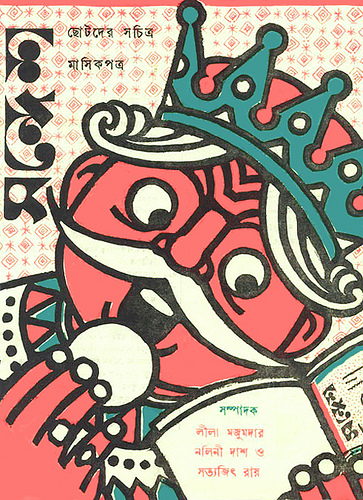


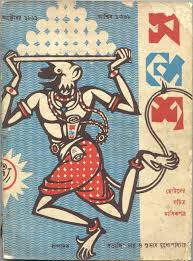
Covers of Sandesh Magazine, and other illustrations by Satyajit Ray
During a stint in England with D.J. Keymer, Ray is said to have watched Vittorio De Sica’s Bicycle Thieves. The experience profoundly moved him and strengthened his resolve to become a filmmaker. And yet, even after transitioning into cinema and directing some of the most important films in Indian history, he never abandoned his love for graphic and illustrative design.
He designed posters for many of his own films, and they remain breathtaking. The posters for Charulata, Mahanagar, Devi, and Ganashatru are my personal favorites. These posters reveal a designer and artist deeply aware of negative space, typography, color, imagery and symbolism.





Posters of Satyajit Ray Films: Devi, Charulata, Mahanagar, Ganashatru
As a visual designer, Satyajit Ray was far ahead of his time. His work subtly carried Western modernist influences while remaining deeply rooted in Bengali visual culture. His treatment of type and image feels contemporary even today. In many ways, his film posters stand as some of the most refined examples of commercial art in Indian art history.
We often celebrate Ray for the worlds he built on screen.
But perhaps we should also celebrate the worlds he built on paper.


Comments